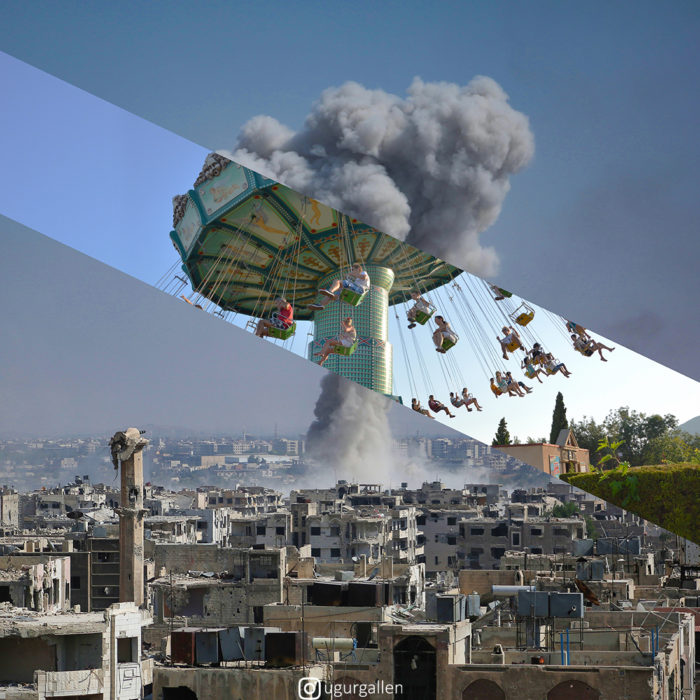
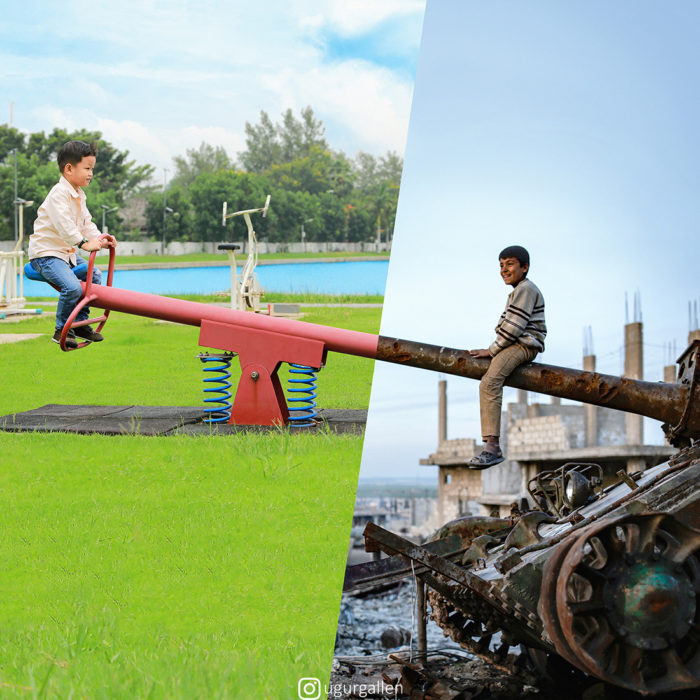
The exhibition presents a selection of works from Parallel Universes, the series that has come to define Uğur Gallenkuş’s artistic practice in the field of digital art. Each work combines two photographs into a single image: on one side, the consequences of war, migration, and natural disasters as documented by photojournalism; on the other, the normality of everyday life shaped by prosperity, security, and consumerism.
The transition between the two images is almost imperceptible, leading the viewer to perceive what initially appears to be a seamless scene before the contrast between the two realities gradually reveals itself in all its force, exposing a profound narrative and symbolic fracture.
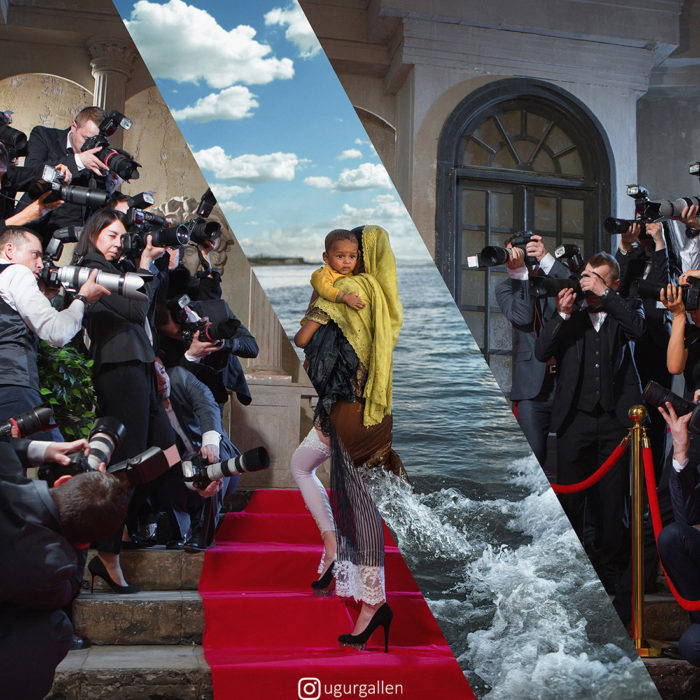
At the core of the series lies the coexistence of two contemporary realities: worlds that share the same historical moment, yet are separated by such profound social, economic, and human divides that they appear to belong to parallel universes. The images drawn from conflict zones depict some of the most extensively documented crises of recent years—including Afghanistan, Syria, Iraq, Palestine, Ukraine, and Yemen—through the work of photojournalists on the ground. Their counterparts are sourced from the relentless visual flow of the internet: advertising, lifestyle photography, and the aesthetics of social media. These pairings are never arbitrary.
Gallenkuş carefully constructs each composition through corresponding gestures, colour palettes, and visual structures, allowing the two halves to merge seamlessly until their content reveals the irreconcilable distance that separates them. The result transcends the simple juxtaposition of images, collapsing the psychological distance that often characterises photojournalism, where tragedy is perceived as something remote. Some works quietly introduce conflict into seemingly ordinary domestic settings; others make explicit just how fragile and contingent comfort and security can be.
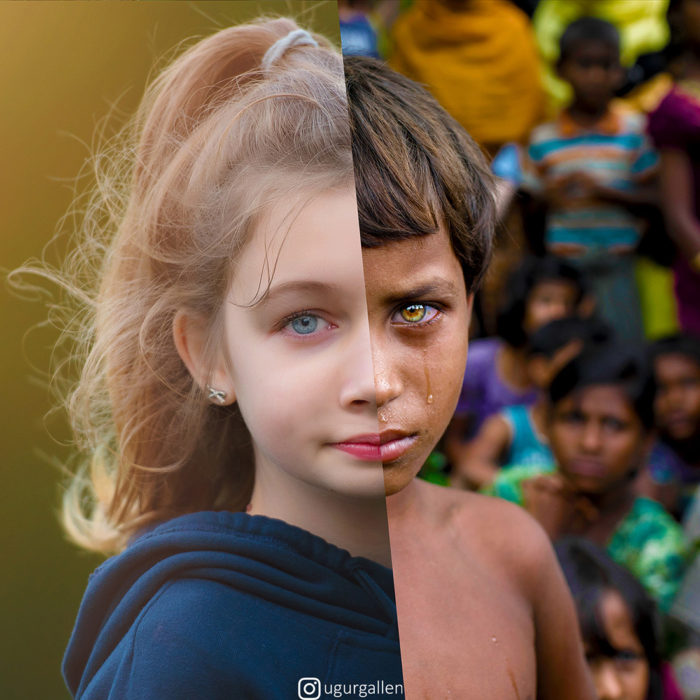
This body of work belongs to a long tradition of image montage and juxtaposition—from Aby Warburg’s image panels to the appropriation strategies of Andy Warhol and Marcel Duchamp—reinterpreted for an age defined by digital communication and the instantaneous consumption of images. Displayed in the physical space of an exhibition rather than on a smartphone screen, these collages interrupt the rapid flow of visual consumption, inviting viewers to pause and confront the unsettling encounter between two realities that exist simultaneously—profoundly connected, yet separated by worlds apart.
Location:
INFO
Location: Museo del Paesaggio |
Via Chianti, 61 – Castelnuovo Berardenga (SI)
Period: October 10th – November 29th
Opening Time:
Friday: 03:00 pm-07:00 pm
Sat-Sun: 10am-07:00pm
Holidays: 10am-07:00pm

TICKET VALID FOR VISITING ALL THE EXHIBITIONS
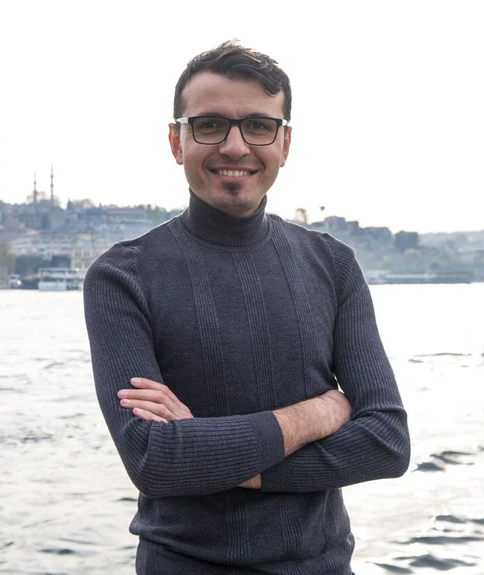
Photographer Biography: Uğur Gallenkuş (born in Niğde, Turkey, in 1990) is a digital artist internationally recognized for his striking photo collages that bring together contrasting realities of the contemporary world. Raised in Istanbul, he graduated in Business Administration from Anadolu University in 2013 and initially pursued a career in the corporate sector. His artistic journey began unexpectedly in 2015, when the widely circulated photograph of Alan Kurdi—the Syrian child who died while attempting to reach Europe—deeply affected him and inspired him to use digital collage as a way to reflect on global inequalities. From this impulse emerged the project ‘Parallel Universes,’ a series of works that juxtapose images of everyday life in privileged societies with photojournalistic scenes from contexts marked by war, migration, and poverty. Through these powerful visual contrasts, Gallenkuş reveals the stark divide between worlds that exist simultaneously yet rarely intersect.
A self-taught artist with no formal training in design at the beginning of his career, Gallenkuş found in social media a powerful platform to share his work, reaching a global audience with images that combine emotional impact and social commentary. His works have been widely published and exhibited internationally and have led to collaborations with organizations committed to human rights, refugee assistance, and global awareness campaigns.
Through the direct and universal language of collage, Gallenkuş uses art as a tool for reflection and advocacy, inviting viewers to confront the contradictions of the present and the profound inequalities that shape our world.